
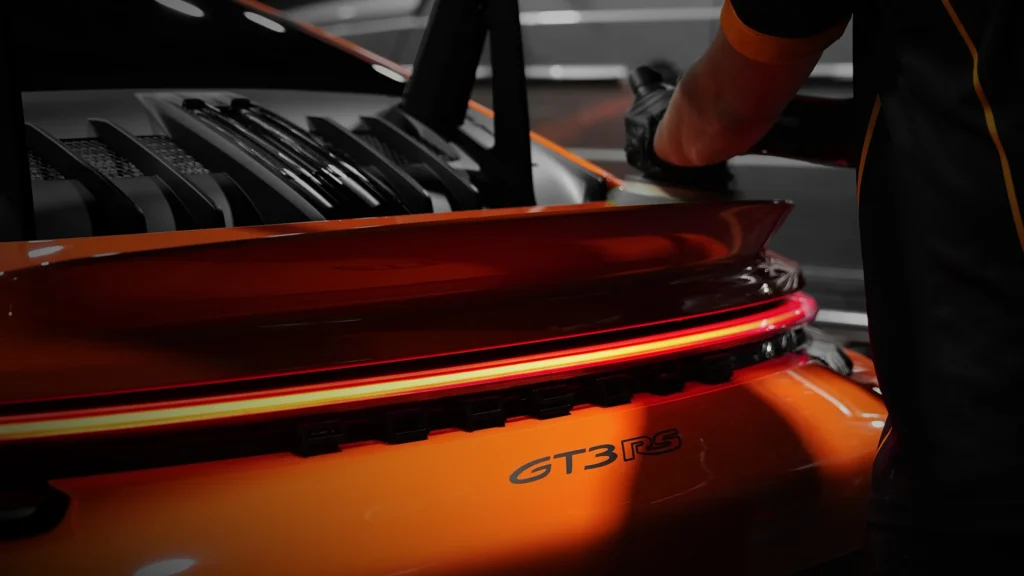
Remember the day you drove your car home? The paint was deep, glossy, and reflected the sky like a mirror. Over time, sun, dust, automatic car washes and everyday driving dull that finish, leaving swirl marks and faded paint. The good news: in most cases the shine isn’t gone for good. It’s hidden under a layer of fine scratches, swirl marks and oxidation, and professional car polishing is the proven way to bring it back.
In this car polishing guide, we explain what car paint polishing really is, how it differs from waxing and compounding, the signs your car needs it, what the professional process involves, and how to make the shine last longer.
What Is Car Polishing? Polishing vs Waxing vs Compounding
Car polishing is a paint correction process. A machine polisher and a fine abrasive polish gently level the top layer of your car’s clear coat, removing the imperfections that scatter light and make paint look dull. Waxing, by contrast, adds nothing corrective: it simply lays a protective layer on top of the paint.
| Treatment | What it does | Removes scratches? | Best for |
|---|---|---|---|
| Compounding | Heavy cut that removes a thin layer of clear coat | Yes, deeper defects | Heavy swirls, oxidation, sanding marks |
| Polishing | Fine cut that refines and brightens the paint | Yes, light to moderate | Swirl marks, haze, light scratches, dullness |
| Waxing / sealant | Adds a protective, glossy top layer | No | Protection after polishing |
| Ceramic coating | Bonds a hard, long-lasting protective layer | No | Long-term protection after correction |
Think of it this way: polishing restores the shine, and wax or coating protects it. For the best result, you need both, in that order.
6 Signs Your Car Needs Polishing
Not sure if your paint needs attention? Park in direct sunlight or shine a torch on the paint and look for these signs:
- Swirl marks: fine, circular spider-web scratches, usually caused by brushes at car washes or dirty wash mitts.
- Dull or faded paint: colours look flat or chalky, especially on the roof, bonnet and boot that face the sun.
- Light scratches: marks from keys, bags, branches or fingernails around door handles.
- Water spots: etched rings left after hard water dries on the surface.
- Rough texture: the paint feels gritty to the touch even after washing.
- Selling or buying: a polished car makes a far stronger first impression and can help you get a better resale price.
The Professional Car Polishing Process, Step by Step
A proper polish is far more than rubbing on a product. Here’s what a professional detailing job involves:
- Thorough wash: a pH-neutral shampoo and the two-bucket method remove loose dirt without adding new scratches.
- Decontamination: a clay bar and iron remover lift bonded contaminants such as tar, industrial fallout and tree sap.
- Paint inspection: detailers use specialist lighting, and often a paint thickness gauge, to assess defects and how much clear coat is safe to work with.
- Masking: rubber trims, plastics and badges are taped off to protect them from the polisher.
- Compounding (if needed): deeper scratches and heavy swirls are removed with a cutting compound and pad.
- Polishing: a finer polish refines the paint, removing haze and bringing out maximum gloss and clarity.
- Panel wipe: an IPA wipe removes polishing oils so the true finish can be checked and protection bonds properly.
- Protection: wax, a paint sealant or a ceramic coating locks in the shine and shields the paint.
Depending on the car’s size and condition, a full polish can take anywhere from several hours to a full day.
Professional Car Polishing vs DIY: Which Is Better?
DIY polishing kits are tempting, but machine polishing in inexperienced hands can burn through clear coat, leave holograms or damage edges and trims. Clear coat is thin, and once it’s gone, the only fix is a respray. A professional detailer brings:
- The right tools: dual-action and rotary polishers, a range of pads and compounds, and proper inspection lighting.
- Paint knowledge: every car’s paint is different; some are soft and mark easily, others are hard and need more cut.
- Safe, measured correction: removing only as much clear coat as needed, so your paint stays healthy for years.
- A better finish: deeper gloss, sharper reflections and a uniform result across every panel.
- Time saved: a job that could take you a weekend is done properly in a day.
Car Polish Aftercare: How to Keep Your Shine Longer
A polish can last for years if you look after the paint, especially in hot, sunny and dusty conditions where UV and sand take a heavy toll. Follow these simple habits:
- Always protect after polishing: wax lasts weeks, sealants a few months, and ceramic coatings can last years.
- Wash gently: use a pH-neutral shampoo, clean microfibre mitts and the two-bucket method; avoid brush car washes.
- Never wipe dust dry: wiping a dusty car drags grit across the paint and creates new swirls. Rinse first.
- Wash in the shade: washing in direct sun dries soap and water too fast, leaving spots and streaks.
- Park smart: use covered parking or a quality car cover to cut UV exposure and bird droppings.
- Remove contaminants quickly: bird droppings, bug splatter and tree sap can etch the clear coat within hours in high heat.
- Book maintenance details: a light polish or protection top-up every 6 to 12 months keeps the finish at its best.
Car Polishing FAQs
How often should I polish my car? Most cars benefit from a professional polish once or twice a year. Cars that are parked outdoors or washed often may need it more frequently.
Does polishing remove all scratches? Polishing removes swirl marks and light to moderate scratches in the clear coat. A scratch that catches your fingernail has likely gone through to the base coat or primer and may need touch-up or repainting.
Will polishing damage my paint? Not when done correctly. A professional measures and removes only a tiny fraction of the clear coat. Damage usually comes from inexperienced machine use.
Can I polish a new car? Yes. Many new cars arrive with swirls and marks from transport and dealer washing. A light polish followed by a ceramic coating is a popular way to start ownership.
How long does polishing take? A single-stage polish can take a few hours, while multi-stage paint correction can take a full day or more.
Is polishing the same as a ceramic coating? No. Polishing corrects the paint; a ceramic coating protects it. For best results, polish first, then coat.
Book Professional Car Polishing Today
Your car’s paint is its first impression and its first line of defence. Regular professional car polishing removes years of wear, restores deep gloss and, paired with the right protection, keeps your car looking new for longer.
Ready to see your car shine again? Book your car polishing and paint correction appointment with D Luxe World in Dubai today. Call us at +971 56 357 0000 or book online for a free paint inspection and quote.